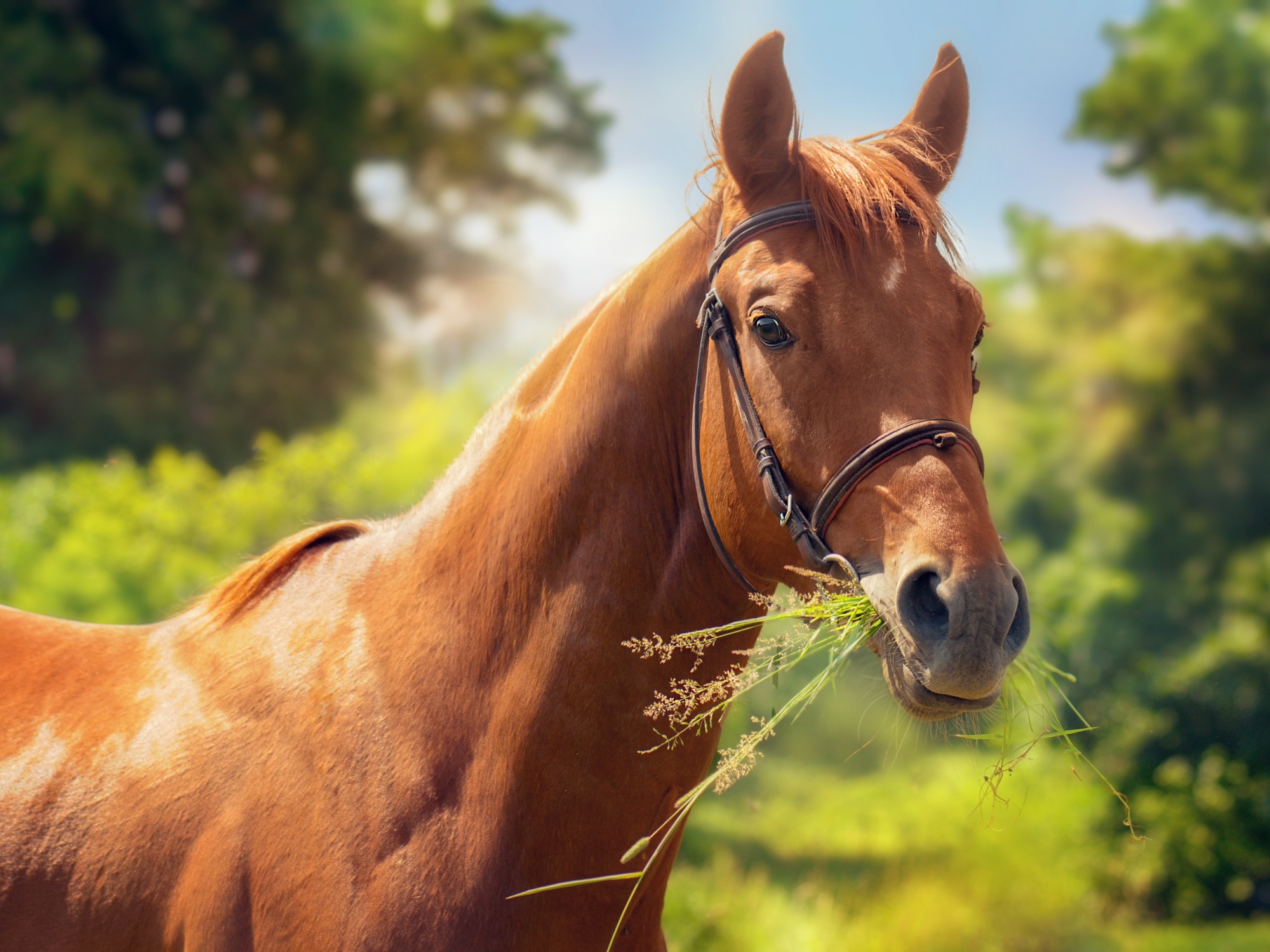
At sunrise, you pull on your boots, admire the pasture, and head out to the stables to feed the horses. Anyone who spends time around barns knows horses can eat through a stack of hay quickly and drain a water trough before the afternoon. There comes a time when horse owners wonder how much their horses need to eat and drink each day to stay strong.
Feeding horses isn’t just about tossing hay over the fence. Size, workload and the Texas heat all play a role in how much fuel a horse actually needs. Figure out the baseline, so you can keep every animal in your care healthy.
Daily Feed Needs
A horse’s digestive system works best when it stays busy. Horses evolved to graze almost constantly, so they need steady forage instead of large, infrequent meals.
Most adult horses eat about 1.5 to 2 percent of their body weight in forage each day. For example, a 1,000-pound horse consumes between 15 and 20 pounds of hay or pasture grass daily. Horses that work cattle, run barrels, or travel long trails often need grain or performance feed to support extra energy use.
Consistent feeding schedules also help stabilize digestion. Horses thrive on routine, and regular feeding times reduce stress around the barn.
Quality matters just as much as quantity. Clean coastal hay and well-managed pasture grass support healthy digestion and a steady weight. Moldy or dusty hay might trigger colic symptoms or respiratory problems, so always check bales before tossing them into the feeder.
Water Consumption
Most animals need water to survive. Horses drink between 5 and 15 gallons of water per day, depending on the weather, their diet, and their physical activity.
Texas summers push that number higher. A horse that sweats during turnout or exercise can easily double its water intake. Salt blocks and electrolyte supplements also encourage healthy drinking habits.
Clean troughs matter, too. Horses might refuse water that smells stale or contains algae. Scrubbing the troughs every day ensures a steady intake.
When a horse suddenly drinks less water, there could be an underlying health issue. Monitoring tools and stall cameras provide real-time alerts that safeguard horses’ health. When you’re alerted to unusual eating and drinking habits, you can double-check on their well-being before their health takes a turn for the worse.
Signs Your Horse Isn’t Getting Enough Nourishment
Horse owners who know how much horses need to eat and drink each day quickly recognize problems. Weight loss, dull coats, reduced manure, and low energy signal poor intake. Dehydration shows up through dry gums, skin that tents when pinched, and sluggish behavior.
Daily observation remains the best tool on any farm. Walk the pasture, check water troughs, and watch how each horse approaches feed time.
At the end of the day, horse care doesn’t require complicated formulas. Good hay, plenty of fresh water, and consistent routines cover most of the job. Each horse will thrive in your hands.

Texas Outdoors
Latest posts by Texas Outdoors (see all)
- What To Check Before Spending a Day on Lake Travis – September 17, 2026
- Tips To Make Your Pickup Truck the Perfect Travel Vehicle – September 16, 2026
- The Best Winter Destinations for a Motorcycle Trip – September 14, 2026

Leave a Reply