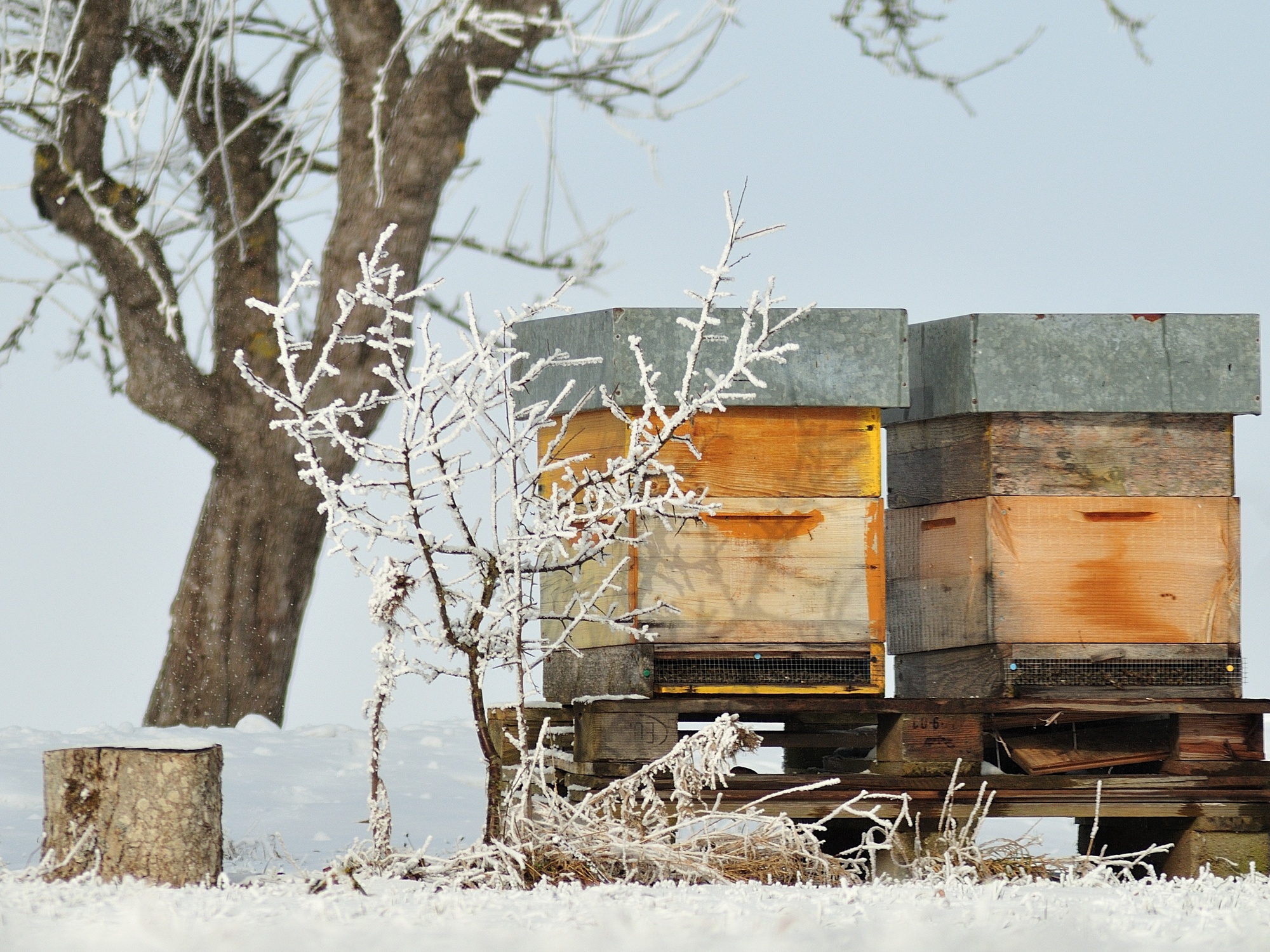
Winter is coming. Are your honey bee colonies prepared for it? The cold season can introduce problems that threaten their health and survival, particularly when hives haven’t received proper preparation.
Fortunately, many common winter beekeeping issues can be addressed before temperatures drop. Here are some problems to watch for and how to prepare your colonies for the colder months ahead.
Insufficient Honey Stores
Honey bees rely on stored honey for nutrition throughout winter because cold temperatures prevent them from gathering nectar. If a colony consumes its reserves before spring, it risks starvation.
The amount of honey a colony needs depends on the local climate. Bees in northern regions generally require larger reserves because they spend more time inside the hive.
During fall inspections, assess the colony’s honey supply and compare it with recommendations for your area. If stores are insufficient, provide supplemental feed while temperatures still permit syrup feeding. Winter emergency feeding requires an appropriate solid food source, such as fondant, placed where the cluster can access it.
Excessive Moisture Inside the Hive
Moisture becomes a problem when warm air from the winter cluster rises and encounters cold surfaces inside the hive. The resulting condensation can drip onto the bees, leaving them wet and vulnerable to chilling.
A colony produces moisture naturally through respiration, so preventing all humidity isn’t possible. Instead, the concern is allowing condensation to collect above the bees.
Proper insulation above the cluster reduces condensation on the inner cover. Ventilation must also accommodate the colony’s moisture production without introducing excessive cold drafts. Before winter, inspect the hive’s upper cover and address any conditions that encourage water to accumulate inside.
Varroa Mite Infestations
Varroa mites are among the most serious threats to honey bee colonies entering winter. These parasites weaken bees and transmit viruses, which can reduce the lifespan of the workers responsible for surviving the colder months.
The timing of an infestation is particularly important. Colonies begin producing long-lived winter bees during late summer, so uncontrolled mite populations during this period can compromise the bees before winter begins.
Monitor mite levels throughout the active season using an established sampling method. If populations exceed recommended treatment thresholds, use an approved treatment appropriate for the colony’s conditions. Effective mite management must begin before winter bees develop.
Weak Colony Populations
A winter colony depends on thousands of workers gathering into a cluster to conserve heat. When the population becomes too small, the remaining bees struggle to maintain the warmth necessary for survival.
Colonies naturally lose workers throughout winter. A hive that enters the season with an inadequate population has fewer bees available to replace those losses.
During fall inspections, evaluate how many frames the colony occupies and whether its population is suitable for overwintering in your region. Extremely weak colonies may benefit from combining with stronger, healthy colonies before temperatures decline. Confirm that both colonies are free from concerning disease symptoms before combining them.
Failing Queens
A failing queen threatens winter survival because the colony depends on workers produced during the preceding months. When the queen’s egg production declines, fewer young bees emerge to maintain the population.
Signs of queen problems include an irregular brood pattern or unexpectedly low brood production during the appropriate season. However, seasonal reductions in egg laying are normal as winter approaches, so timing must inform your assessment.
Fall inspections provide an opportunity to evaluate queen performance while replacement remains possible. If the queen is failing, requeening before cold weather gives the colony an opportunity to produce additional workers for winter.
Colony Collapse Disorder
Colony collapse disorder is more common in winter because colonies face additional stress from colder temperatures and limited food availability. When CCD occurs, most adult worker bees disappear from the hive, leaving the remaining colony unable to survive.
Poor nutrition and pesticide exposure are among the factors associated with CCD. These problems can weaken colonies before winter and reduce their ability to withstand harsh conditions.
To prepare, maintain adequate food supplies and minimize pesticide exposure throughout the active season. Addressing these concerns before winter supports healthier colonies as temperatures drop.
Blocked Hive Entrances
Winter snowfall can cover hive entrances and restrict the movement of air through the colony. Even without heavy snow, dead bees sometimes accumulate near the opening and create an obstruction.
Bees remain inside their hives during extended cold periods, but they still need ventilation. On warmer winter days, they also leave the hive briefly for cleansing flights.
After heavy snowfall, inspect the entrance from outside and gently remove snow that blocks the opening. Entrance reducers should leave sufficient room for airflow while limiting unwanted access. These external checks allow you to address obstructions without opening the hive.
Mouse Infestations
Mice seek protected nesting areas as outdoor temperatures decline, and an unguarded beehive provides an attractive shelter. Once inside, a mouse may chew through comb and contaminate the interior with waste.
During winter, bees remain concentrated around their cluster rather than patrolling the entire hive. This gives rodents greater freedom to occupy unused areas.
Installing a mouse guard during fall prevents rodents from entering through the lower opening. The guard needs openings large enough for bees to pass through while excluding mice. Inspect its placement before temperatures drop, since making adjustments becomes less convenient once the colony settles into winter.
Cold Wind Exposure
Cold winds increase heat loss from hive surfaces, particularly when colonies occupy exposed locations. Although honey bees generate warmth within their winter cluster, windy conditions can increase their energy demands.
The colony responds by consuming stored food to maintain suitable conditions within the cluster. Over an extended winter, additional energy demands place greater pressure on its available reserves.
Hives positioned behind natural windbreaks receive greater protection from persistent gusts. Where appropriate, winter wraps also reduce exposure around the hive body. Preparation should preserve necessary ventilation, since restricting airflow excessively creates separate moisture problems.
Improper Hive Positioning
A poorly positioned hive may experience additional winter problems when rainwater collects beneath its equipment. Prolonged contact with standing water increases moisture exposure and can damage wooden hive components.
The problem becomes worse when the hive sits directly on wet ground. During repeated freezing and thawing, soil movement may also alter its position.
A stable hive stand keeps the equipment elevated above surrounding moisture. The hive should also have a slight forward tilt so water can drain away from the entrance rather than collect inside. These adjustments are best completed during fall, before frozen ground complicates repositioning.
Prepare Your Colonies Before Winter Arrives
Successful winter beekeeping begins with understanding what your colonies need before temperatures fall. Once winter arrives, opportunities for making substantial changes become limited, so early preparation gives you more control over hive conditions.
Addressing winter beekeeping issues during fall allows your bees to enter the colder months in better condition. From there, occasional external observations let you monitor their surroundings while leaving the colony to manage its winter cluster.

Texas Outdoors
Latest posts by Texas Outdoors (see all)
- Common Winter Beekeeping Issues and How to Prepare – October 13, 2026
- Why Heavy Towing Changes How Your Truck Performs – October 12, 2026
- The Best Shoes for Spending Rainy Days Outdoors – October 9, 2026

Leave a Reply