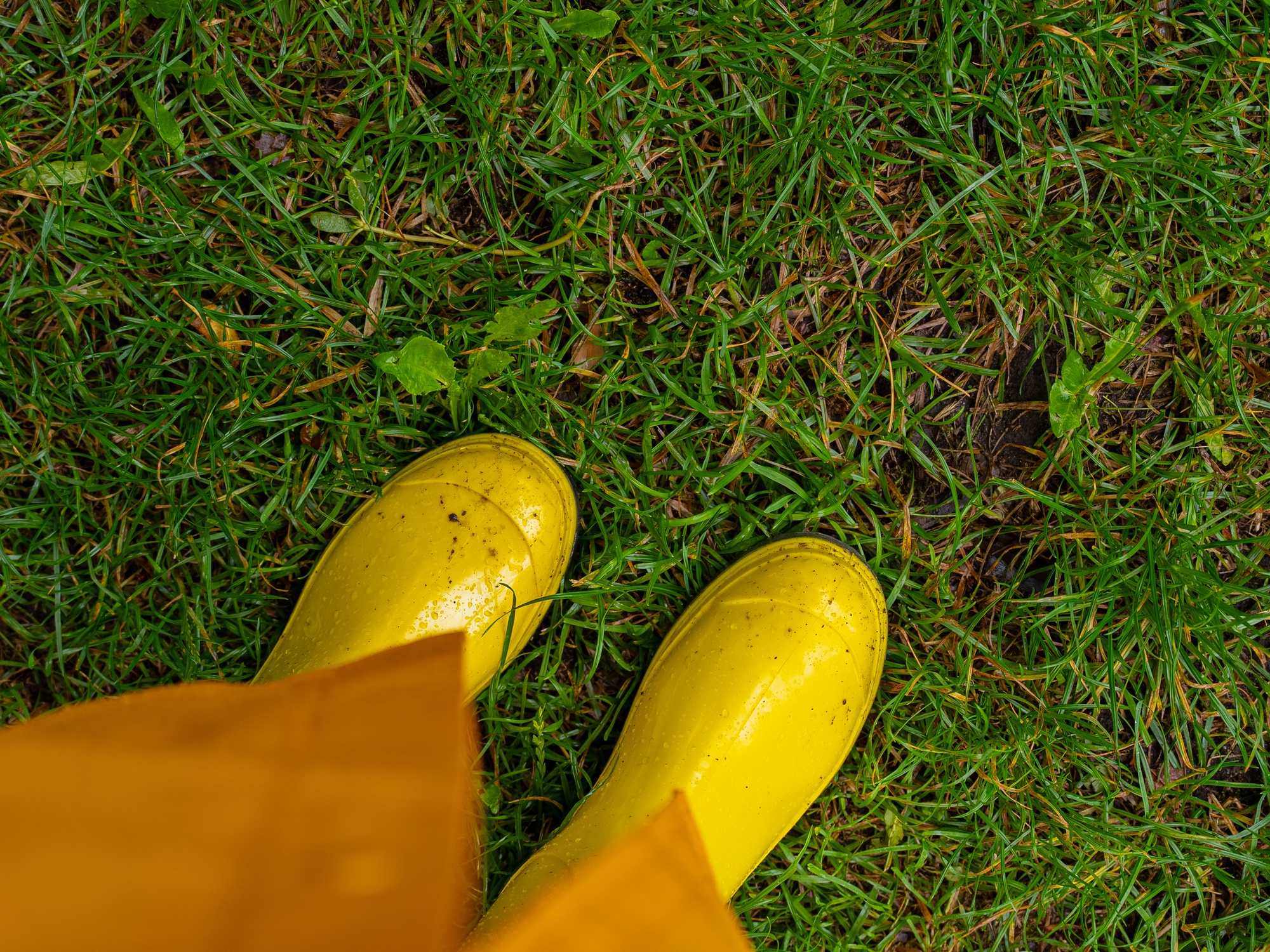
Headed outside for a long day, but it’s raining and you’re not sure what shoes are best for tackling the wet ground and muddy terrain? Your footwear affects how comfortably you move once puddles start forming and soil turns slick. The best shoes for spending rainy days outdoors give water fewer ways to reach your feet while providing traction for the conditions underfoot. However, the right pair depends on where you’re headed and how long you’ll be outside. Here are several boot styles to consider before you walk out into the rain.
Rubber Rain Boots
Rubber rain boots are built for standing water. Their molded outer shell doesn’t absorb moisture, so puddles aren’t much of a problem even when water reaches the sides of the boot. Taller versions extend that protection farther up your leg when water splashes as you walk.
That design is most useful when keeping water out is your main concern. Basic rain boots don’t provide the same underfoot support as footwear made for distance, so save them for shorter outings where puddles are the bigger issue than mileage.
Waterproof Hiking Boots
Waterproof hiking boots are made for wet trails where traction becomes more important with every step. Rain softens packed dirt and creates slick sections, so the sole needs enough tread to grip the trail instead of sliding across its surface.
Hiking boots use deeper lugs to create that grip while a waterproof membrane keeps moisture from reaching your socks. Together, those features let you keep moving across wet terrain without sacrificing the support needed for a longer hike. They’re especially useful when your route includes slopes where slick footing becomes harder to manage.
Duck Boots
Duck boots handle shallow puddles without giving you the full height of a traditional rain boot. Their rubber lower section surrounds the part of your foot most exposed to standing water, so a wet sidewalk doesn’t immediately leave your socks damp.
The softer upper keeps the boot less rigid above the ankle, which suits everyday walking on pavement. This design is best when water collects in spots rather than covering the entire route. Once puddles become deep enough to rise beyond the rubber section, duck boots lose the protection that gives them their advantage.
Tall Western Boots
Tall western boots are another consideration for light rain, but there are dos and don’ts of wearing them when the weather turns wet. Treated leather can handle brief contact with rain.
Long exposure is another issue. Repeated soaking can dry the leather after the water evaporates, which can affect the material over time. Western boots are better reserved for lighter rain when you won’t be standing in water for extended periods. Their taller shafts still give your lower legs some protection from splashes along the way.
Waterproof Chelsea Boots
Waterproof Chelsea boots suit rainy days spent on pavement. Their ankle-height construction covers enough of your foot for damp sidewalks and shallow puddles without adding the bulk of a taller boot.
Because the opening sits close to the ankle, this style has a definite limit once water gets deeper. Rain entering from the top defeats the waterproof upper underneath it. For city walking or errands, though, that lower profile keeps the boot comfortable for ordinary wear while still protecting your feet from the water you’re most apt to encounter along paved routes.
Insulated Rain Boots
Insulated rain boots are built for cold rain, when keeping your feet dry solves only part of the problem. A waterproof outer shell blocks outside moisture, while the lining reduces heat loss inside the boot.
That added insulation keeps your feet warmer when you’ll spend a long period on cold ground. Without it, a waterproof boot may still leave your feet uncomfortable as temperatures drop. These boots aren’t intended for warm rainy days because the same lining holds heat inside. Save them for colder weather when you need protection from both rain and low temperatures.
Muck Boots
Muck boots belong in deep mud. Their tall shafts cover more of the lower leg, so soft ground can rise around the boot without spilling over the top as easily. After heavy rain turns a field or yard into thick mud, that extra height keeps more of the mess outside the boot.
Their soles are designed for the same conditions. Pronounced tread presses into soft soil rather than gliding over the surface, giving your feet more grip as the ground moves beneath you. When mud is the main obstacle, muck boots give you the height and traction needed to move through it.
Waterproof Work Boots
Waterproof work boots are designed for spending hours on wet ground. Their construction provides the underfoot support needed for repeated standing and walking while a waterproof barrier keeps rain from soaking through the upper.
That combination separates them from lighter rain footwear. A short trip through puddles doesn’t demand much structure, but a full day outdoors puts more pressure on your feet. Work boots distribute that pressure through a firmer sole, so wet weather doesn’t require giving up the support you’d expect from your regular work footwear during a long day outside.
Neoprene Boots
Neoprene boots give you more flexibility through the upper portion of a tall waterproof boot. The material bends with your lower leg as you walk, which reduces the stiffness you may notice in designs made entirely from rubber.
Many pairs use rubber around the foot, where contact with water is greatest, before transitioning into neoprene higher on the leg. The result is a boot that still handles wet ground without restricting movement as much through the shaft. Neoprene also provides some insulation, making this construction particularly suited to cooler days spent walking through damp terrain.
Waterproof Lace-Up Boots
Waterproof lace-up boots give you more control over how securely the footwear sits around your foot. Tightening the laces limits unwanted movement inside the boot, which becomes valuable when the ground is slick or uneven.
A gusseted tongue keeps the same construction focused on wet conditions. Because it connects along the sides of the upper, there are fewer open gaps beside the laces where rain can enter. This style suits outdoor walking where secure footing takes priority and you want a boot that stays closely fitted instead of moving around your foot with each step.
Pick the Pair That Matches the Weather
The best shoes for spending rainy days outdoors depend on the conditions you expect to face rather than the forecast alone. A light drizzle on pavement calls for different footwear than several hours spent in deep mud.
Think about how much water will reach the boot and how demanding the ground will be underfoot. From there, you can narrow your options. The right pair should keep your feet protected while still fitting the kind of outdoor day you already have planned.

Texas Outdoors
Latest posts by Texas Outdoors (see all)
- Common Winter Beekeeping Issues and How to Prepare – October 13, 2026
- Why Heavy Towing Changes How Your Truck Performs – October 12, 2026
- The Best Shoes for Spending Rainy Days Outdoors – October 9, 2026

Leave a Reply